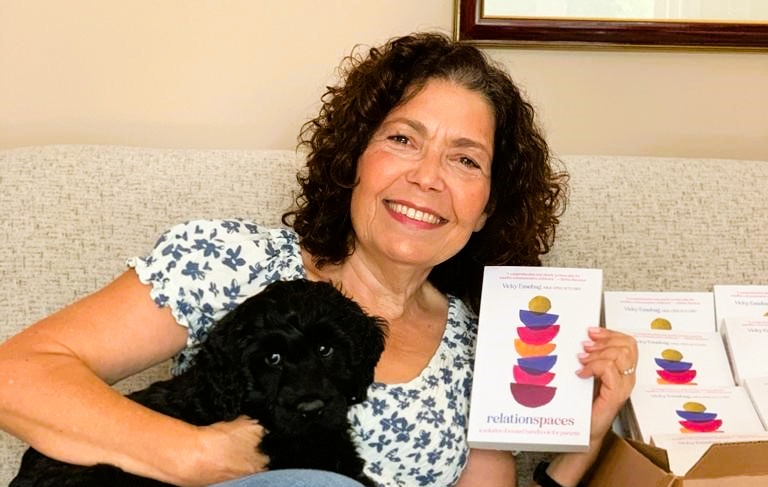
In a recent gathering with parents, caregivers and school staff, we reflected on developing respectful and productive Relationspaces with young people of all ages. I was inspired by their resilience. Even while experiencing frustrations and stressors with their children/students, they were so invested in the hope for practical strategies to initiate positive change. Interestingly, their questions to me were all centered on communication and on the ‘why’:
- Why do our young people act out?
- Why do they not listen?
- Why can they not just follow the rules?
- Why will they not talk to me?
- Why will they not respect what I have to say?
Over the years, we develop an understanding that when we ask ‘why’, we can get to the root of a problem. This may be true, yet I encouraged the group to think differently about the ‘why’, perhaps as a potential deterrent to communication with our children.
In a therapeutic/coaching context, Solution Focused practitioners don’t need to know the ‘why’ or to dwell on the problem, to help guide individuals toward productive change. Among other useful strategies, we gently help people to notice what they would like to see happen instead – an exercise that immediately generates hope and wellbeing. I encouraged the group to think of daily conversations with young people in a similar way – even when we feel frustrated by their behaviour or choices in the moment, how can we step away from asking them ‘why’, and how might this help?
This new edition of the Relationspaces Newsletter will shed some light on this issue:
How Young People Interpret our ‘Why’ & What Can Help
A Solution Focused Shift:
Young people usually walk away or get defensive in ‘why’ conversations that feel accusatory. There’s a power imbalance when the adult says, ‘‘Why did you slam the door?’, ‘Why are your grades slipping?’, or ‘Why did you post that online?’, and young people will likely respond with:
- ‘I don’t know’, OR
- A lie, OR
- An excuse, OR
- Perhaps no response at all
Before all else, a starting point for a Solution Focused conversation is the willingness to communicate. Dropping the ‘why’ is one of the most positively intentional ways in which parents, caregivers and teachers inspire young people to want to engage in dialogue with adults. I’m not suggesting that we ignore facts or minimize problems. Rather, let’s address the problem hopefully and in a reflective, honest and respectful conversation. These are dialogues enriched with curiosity and that invite the young person to self-awareness as they discover their own creative solutions.
Alignment with Brain Development:
Neuroscience teaches us that the prefrontal cortex region of the brain responsible for impulse control, long-term planning and rationalizing cause-and-effect, isn’t fully developed until a person reaches their mid-20s. When a young person acts out or makes a poor choice, it’s often driven by an immediate emotional surge from the amygdala rather than a calculated, logical plan. Demanding that they explain the ‘why’ behind an irrational, emotional impulse, forces them to use a part of their brain that wasn’t fully aware when the event occurred. It frustrates both adult and child to engage in the ‘why’ as the young person will likely have little awareness of why they made a poor choice.
Discouraging a Defensive or Flight Response:
To a young person, ‘Why did you do that?’, does not sound like an invitation to converse. It sounds like a trap, signaling that an adult is potentially building a case, preparing a lecture, or getting ready to punish. However, the moment we drop the ‘why’, the young person’s defensive posture softens. By shifting the focus to a learning stance, we can ask what may have worked for them in a similar situation, what they may want and need, and what can potentially be better when faced with another such situation. They can then leave the conversation feeling hopeful as they reflect on future possibilities for success.
Noticing the Positive & Reframing the Narrative:
Young people are in the process of developing a personal self-concept. If we notice and point out their negative over positive behaviours/attributes (‘Why are you always so lazy?’, ‘Why can’t you just do as you’re told?’), they begin to internalize these as permanent personality traits. What follows is that rather than processing mistakes as learning opportunities, they get stuck in defining themselves by their mistakes, e.g., ‘I am a bad/lazy person.’ – promoting shame and self-doubt.
Solution focused conversations intentionally notice positive actions and attributes in the individual, as we celebrate small amounts of progress and any positive difference. Even young people who struggle with behaviour, motivation, learning, etc., have moments of success when they’re managing and coping well. Recognizing these moments, contributes to a positive self-esteem.
Notice how a slight change of language completely shifts the narrative:
- Problem-Focused: ‘Why did you skip class on Tuesday?’ (Forces them to defend a bad choice).
- Solution-Focused: ‘I noticed you made it to class on Monday and Wednesday. What worked for you on these days that helped you to show up?’ (young person focuses on their resilience).
This subtle shift is a reminder to the young person that they already possess the ability to succeed at attending. With this understanding, they internally acknowledge that if they’ve demonstrated the ability to attend, they can repeat the same practice. The individual also notices that they don’t have to behave perfectly to be positively noticed and that they’re already experiencing progress. We may not see these lightbulb moments in a young person in the moment, but rest assured, they’re occurring either during or after conversation.
Developing Autonomy in Safe Relationspaces:
Adults mean well when we step in to solve the ‘why,’ by providing direction or advice: ‘Why did you do this? Maybe you’re spending too much time on your phone. If you keep this up…. This is what you need to do….’. The young person often may inadvertently interpret advice/help from an adult as an underlying message that they’re incapable of figuring things out for themselves – which perpetuates insecurity and dependence.
When we move beyond the ‘why’ question to a stance of gentle curiosity, we invite the young person to think critically with safe and resourceful brainstorming of ideas. Whether we believe their ideas to make sense or to ring true, doesn’t matter, as the conversation is not about giving adults what we want in the moment. It’s about inviting reflection to a Relationspace that explores ALL ideas respectfully. This type of opportunity provides our young people with independence and agency as they work toward meaningful solutions for themselves with our help.
What Can We Ask Instead of ‘Why’?
Notice the Difference in the Following:
Instead of: Why didn’t you do your homework?
Try: What will help you to start working on your homework? What has helped before? How did you manage getting started?
Instead of: ‘Why didn’t you let your brother play?
Try: What do you need when your friend comes over to play? How can you show kindness to your brother by letting him know that? What worked last time your friend came over?
Instead of: Why is your room such a disaster?
Try: Your friends are coming over tomorrow. What is the absolute minimum amount of cleaning needed so you feel good hosting them?
Instead of: Why can’t you get along with your coach?
Try: How will you know when things are better with your coach? What will be a first sign that things are better? Were things ever better with your coach? What was happening then?
Instead of: Why did you get home so late last night?
Try: What will help you to be home less late on a school night? What have you tried already? What might you try next time?
Some Thoughts:
Dropping the “why” is not about lowering expectations or avoiding accountability; it’s about inviting the young person into a Relationspace that explores what they may want and need, rather than a dead-end investigation of a problem. By trading ‘why’ for solution focused inquiry, parents, caregivers and educators stop promoting the defensive, emotional centers of a young person’s developing brain and start engaging their capacity for reflection and autonomy. This subtle shift separates the young person from the problem, allowing them to recognize their own existing personal resiliencies and to discover their capacity for better choices and outcomes.
Ultimately, by letting go of our need to know why a problem is occurring, we give young people the psychological safety and the practical space they need to figure out how to improve their choices and decisions. We also develop a better rapport with them as we encourage engaging and productive conversations.
Put our Expertise to Work for You!
At Relationspaces, we offer coaching, consulting and instructional leadership for schools, organizations, and families.
Contact us at www.relationspaces.com to begin your journey.