Solution Focused practice uses a language of change that is remarkably amenable to daily conversation as it supports effective relationships. It builds hope as it awakens the ability for individuals to understand what is working for them and what they want to change or accomplish. In an interactional climate of wellbeing and self-awareness, it gives people of all ages the agency to explore what is possible even during challenges.
As a solution focused coach, trainer and consultant, and former schoolteacher, school counsellor, and administrator, my role is to support schools, families and organizations to embed solution focused practice in daily interactions that support wellbeing through relationship-building. When people first encounter Solution Focused practice, there is often an impulse to memorize key questions or worry about finding the right phrasing. Yet, when we initially apply Solution Focus to daily life, accessing the right question in the moment can get in the way of listening and connection. I usually recommend practicing one question per day to slowly develop a comfort level in conversation (access in resources below). Yet in daily conversation, a way in which to start embracing the solution focused approach immediately is simply to ask ourselves how we are approaching interactions with others.
Before we enter an interaction between parent and child, teacher and student, team leader and employee, or friend to friend, we could ask ourselves: How mindful are we about how our presence is being felt by the other person? How are our interactions landing? What type of impact are we having on the interaction itself, and on the relationship?
Mindful Presence in Communication
Every day, across kitchen tables, meeting rooms, classrooms, hallways, over lunch and within our own self-talk, we step into shared territory. These fields of connection – which I refer to as ‘Relationspaces’ – are delicate, living landscapes that prioritize communication. How we enter them, and how we manage ourselves in them, shapes the interpersonal climate.
How our presence lands with others, matters far more than whether a problem was neatly solved, a debate was won, or that we managed to give the proper instructions. When our presence in Relationspaces with our partners, children, colleagues, friends and students lands well, they genuinely feel seen, heard and valued. As they notice our intention to prioritize communication with them, they reciprocate this kindness and compassion and learn how to engage others in mindful communication as well.
The following 6 principles of Relationspaces are based in Solution Focused assumptions, and help to reveal how we can bring ourselves to communicative spaces:
Reflection: Openness and honesty in inquiry-based/reflective conversations that avoid unsolicited advice – Detaching from power imbalances (judgement-free) – Inviting all voices to learn from each other, even if we disagree
Strengths: What is Working? – Talking about how we manage and cope, is a vehicle to understanding personal agency. – Celebrating skills, abilities and personal resources in conversation, inspires confidence and drives connection.
Success: Unique for each person – Every interaction is an opportunity to notice and reveal small signs of progress and success. – Capturing small successes each day, is an exercise in mindful caring, which supports autonomy and a positive self-concept.
Action: Each person is uniquely resourceful to what they want and need. – We generate action by actively listening to and engaging the person in what these are. – Removing expectations for outcome in conversation invites opportunities to freely explore ideas that lead to action.
Noticing: Seeing and verbalizing positive intentions & best qualities in ourselves and in others, can change existing narratives that may not be helping. – Reframing the narrative before entering a Relationspace, invites possibilities.
Hope: Solution focused Language of Change casts a hopeful lens on conversations. – Speaking of change as inevitable, sparks a mindset to generating ideas around personal growth and resilience. – Speaking hopefully makes problems easier to work through.
We can reflect on these principles as we think about our posture in interactions with ourselves and with others. Setting an initial and mindful intention automatically supports Solution Focused interactions, even if we didn’t ask the perfect question. We find that our relationships naturally improve because we are trying to understand ourselves and the other person better, and to develop a productive relationship – whether one-on-one or in group settings.
Quiet Curiosity
The posture we hold when entering a Relationspace sets the connection with the other person. Habitually, daily interactions can fall flat when productive communication is not prioritized. There may be hidden agendas at play, expectations for outcome, implicit judgments or ready-made advice. All of these can dismiss the potential for an honest and productive interaction as participants can feel managed or dismissed by expectations that hold greater value than how the conversation itself can evolve organically.
Entering a Relationspace with a Solution Focused posture begins by replacing management with quiet curiosity – a genuine desire to learn and understand. Listening with an open mind, creates a safe, respectful and inclusive space where All are equally welcomed to be themselves while sharing their own insights, hope and wisdom. In healthy Relationspaces, listening is an active, regulating act where we calmly receive others’ words, allowing our nervous systems to settle and enabling a hopeful landing in our interactions.
Entering Interactions that Land Meaningfully
At Work: Centering the conversation on strengths and previous successes keeps the focus on solutions rather than on blame or shame. The ultimate focus is on what already worked well for the team and how they can continue to contribute by accessing these resources again.
At Home: Noticing and verbalizing small moments when things go smoothly – builds a warm, inclusive environment that supports self-efficacy and personal awareness without dwelling on setbacks.
With Friends: Recognizing their resilience during tough times, how they’ve managed and what will make a positive difference – offers supportive connection while honoring their ability to navigate their own life.
With Ourselves: Noticing a small moment in the day when we felt calm, clear, or capable – supporting self-compassion over self-criticism.
Ultimately, how our interactions land with another person or within ourselves is never an accident; it is the natural outcome of how we mindfully enter a Relationspace and how curious and present we are while in it. Even before integrating Solution Focused questions, a great starting point is to integrate the principles of Relationspaces, which are based in core Solution Focused assumptions. We can then gently try out a single thoughtful question when it feels right. These mindful habits cultivate Relationspaces that are resilient, compassionate and deeply inclusive. As we bring our intentional presence into daily interactions at home, at work, and with ourselves, our exchanges become far more than routine dialogue. They are genuine moments of connection that land with warmth, uplift voices, and build trust. They become opportunities to build healthy and effective relationships.
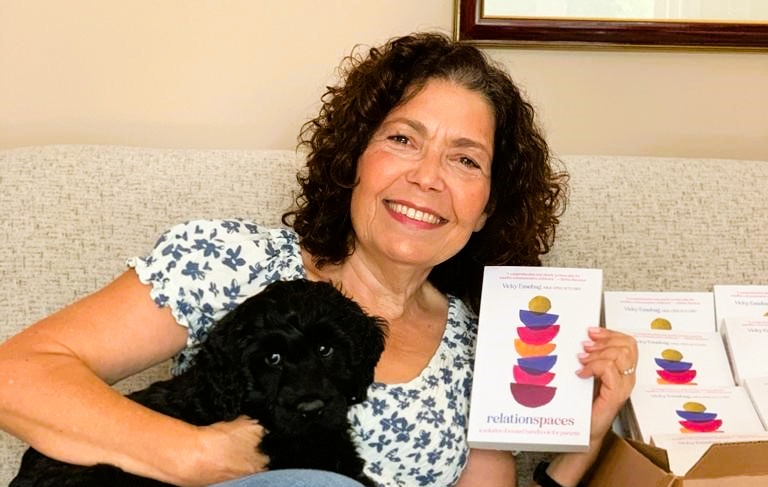
Vicky Essebag – MEd – CPSY, OCT, OPC, CSFC – CCPC – Relational Communication Specialist. Author of Relationspaces; A Solution Focused Handbook for Parents – Founder of Relationspaces; Solution Focused Instructional Leadership, Training, Coaching and Consulting – Schools, Parents and Organizations.
Complimentary Copy of Chapter 12 with Solution Focused Question Bank
Vicky’s Website – https://relationspaces.com/
PODCASTS with Tara Gretton:
A Call Across the Pond; Transforming Relationships at School, at Home and Beyond.
YOUTUBE Channel with Tara Gretton – Relationspaces Power Bursts